

Inspiring people – J.K. Rowling

by admin on February 6, 2010

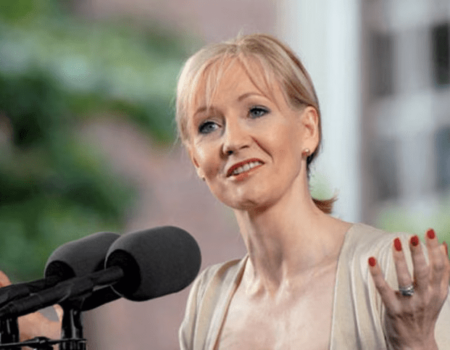
On the eve of the publication of my own children’s book — with six more waiting in the wings! — I wanted to share this inspiring Harvard commencement address  by J.K. Rowling, author of the Harry Potter series. I came across this ‘best of the web’ talk on TED, which I have come to rely on for insight and inspiration whenever I get muddled in my own thoughts. Rowling extols the virtues of failure in providing a bedrock for building a life of your own vision. She also recounts experiences that heightened her empathy and imagination, both of which were key ingredients in her colossal success. This 20 minute video is worth every second.

J.K. Rowling, author of the best-selling Harry Potter book series, delivers her Commencement Address, “The Fringe Benefits of Failure, and the Importance of Imagination,” at the Annual Meeting of the Harvard Alumni Association. (via harvardmagazine.com)

J.K. Rowling Speaks at Harvard Commencement from Harvard Magazine on Vimeo.

Readers, yes, I will let you know when my new book is available. I can’t wait to share the amazing illustrations from my fellow pea-in-the-pod Ian Webster. Stay tuned!

Share the love, post a comment! (And read to a child.)

{ 1 comment }

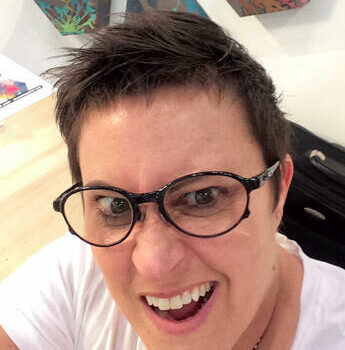
Rachel Austin – painter

by admin on January 28, 2010

Rachel Austin brings a childlike sense of joy and wonder to her oils, watercolors and map paintings. Based in Portland, Rachel originally studied woodworking at the Oregon College of Arts and Crafts until she discovered she loved the freedom and uncertainty of painting. She explores organic shapes that depict beauty in nature as well as a sense of life’s journey. Now with a highly successful Etsy shop and thriving relationships with galleries, Rachel is connecting the dots that make her art accessible and engaging.

Orange Lantern II by Rachel Ann Austin

Orange Lantern II by Rachel Austin

One thing that stands out about your work, whether they’re pieces that are  joyful and carefree or more quiet and contemplative, is that each piece feels alive. How are you capturing this, and do you know ahead of time what direction it’s taking?

This is a great question! I often work on multiple paintings at the same time by myself in my studio. Since I’m often quiet and contemplative while creating each painting, that carries through into the finished piece. I also try to create happy, joyful paintings without stepping over the line into cheesy art.

The design processes differ for me as I create new paintings in my different series. My map paintings begin with the map on panel, which influences my background color choice.  When those layers are dry, the shapes of the map play an important part of the design, and the paintings come alive as I picture what images will work well with each particular map. For the oil paintings and seed watercolors, I feel a little more carefree because, while I have an image in my head, I don’t know exactly where the final painting will end up or how I will get there. These series feel looser to me as I play primarily with the meeting of color and shape.

Hackensack map painting by Rachel Austin

Hackensack map painting by Rachel Austin

Poppie on Cream by Rachel Austin

Poppie on Cream by Rachel Austin

Opportunities for artists to sell their work and interact with people are really wide open now with blogging and with sites like Etsy. What would you say to anyone just entering a career in art and design about taking advantage of this technology?

My website was the first thing I set up, and I think it’s important to have a site that you can have complete control over. There are so many easy ways to publish a website that looks good, where you can include all your work and any other useful information. Beyond that, there are so many opportunities to network and add content online, so I recommend always looking out for new sites/applications, but don’t get caught up trying to do everything. I have a number of networks and sites that I don’t keep up with anymore because they aren’t beneficial unless I spend much more time on them. Learning which things to let go of and not beating myself over it allows me the time to keep the important things current.

It’s also hugely important (for most folks) to maintain a physical relationship in the community. I started out by showing whenever and wherever I could, which helped me meet people and get my name out there. It’s so easy now to throw an Etsy site up and expect people to find you, but it still pays to do shows and meet real people – I think we sometimes forget that ‘social networks’ are also a physical reality, not just online.

Part of Rachel Austin's home studio and display space

Part of Rachel Austin's home studio and display space

I understand you originally did woodworking and made tables until you realized you liked the surprise factor of painting. How important do you think it is to find a medium that suits your temperament?

I think it is great to experiment with lots of different mediums and get a strong understanding of what you can do with them. Then when you have an idea for a project you can bring in all your knowledge of different materials and use them as tools to create your vision. Zero in on what you love and are good at and strive to keep getting better. When I realized I loved the freedom of painting over woodworking, it was a kind of ‘ah-ha’ moment for me. I was studying workworking at the Oregon College of Arts and Crafts and ended up leaving to pursue painting. Woodworking has still been a great skill for me to have – building frames and panels lets me have control over size and quality.

Out of the three main bodies of your work — the oil paintings, the map paintings, and the watercolor seed paintings — what did you start with? And do you like to bounce between them depending on your mood or interest?

Of those three, I started with the oil paintings and then map paintings soon followed. My series right before these, and my first series I ever painted, I called ‘Aerial Views.’ These were abstractions of aerial views of crop circles and land patterns that I did in thick oil paint. I then moved this series into watercolor and have been doing them up until the last year and a half. I’ve recently been thinking of doing a short run of them in oil paint again. They were pretty.

I spend most of my time now on map paintings, perhaps simply because they are the most popular. I’ll often work strictly on those for two or three months and then have the itch to do some experimenting or play with the shapes and colors of my poppies and lanterns oil series. I love having multiple series going, allowing me to move between them if I need a change.

Fulton map painting by Rachel Austin

Fulton map painting by Rachel Austin

Poppies on Red by Rachel Austin

Poppies on Red by Rachel Austin

Yellow Backdrop watercolor by Rachel Austin

Yellow Backdrop watercolor by Rachel Austin

Looking at your oil paintings specifically, you almost exclusively paint poppies and lanterns. What is it that keeps you so engaged in these forms?

I love that shape of an organic circle within a circle – it shows up all the time in my work. It really started with buckeyes that I collect every Fall – I think they are the most beautiful design – a mini sculpture – I keep them in pockets of coats and in little display bowls in the house. After looking at them for so long and seeing similar shapes in poppies and hanging lanterns, depending on the direction, I started the series with lots of overlapping shapes and colors. In the beginning they were looser – more of the under layers visible. Now I play more with bold, opaque colors. I really love creating color.

Five Poppies on Blue by Rachel Austin

Five Poppies on Blue by Rachel Austin

Poppies on Brown by Rachel Austin

Poppies on Brown by Rachel Austin

Poppies on Green by Rachel Austin

Poppies on Green by Rachel Austin

For your map paintings, I understand you were first drawn to maps because you like aerial views of things. So are the elements you paint on top of those maps inspired by the location depicted on the map, or is there no conscious connection?

This is one of the most frequent questions I get asked at shows. For me, the images and the maps themselves feel like they could be from anywhere. I want the viewer to notice there is a map – representing all sorts of good things – where you’ve been, are currently, and where you are going. But the connection hinges more on how my painting fits with the design of the map. For example, I like the map to give a subtle horizon line to the painting and will sometimes put the map upside down or sideways to get this effect. At the same time, I know some people want the location to connect to them personally, so I often do commissions for maps of specific places and features that fit with that unique area.  The paintings almost all have some image that involves flying – birds, paper airplanes, and clouds. There are usually abstracted or simplified plants and flowers that hopefully give the feeling of familiarity – maybe something you’ve quietly noticed out a window on a long drive. A quick, crisp moment of beauty.

Bellport map painting by Rachel Austin

Bellport map painting by Rachel Austin

Kemer map painting by Rachel Austin

Kemer map painting by Rachel Austin

Topeka map painting by Rachel Austin

Topeka map painting by Rachel Austin

Tell me about your watercolor seed paintings and what inspires them.

Each year I try to do a limited series different from my other work. This keeps me feeling fresh in my work and lets me explore ideas I’ve been musing on. My seed series began by taking walks in the Fall and collecting pretty little seeds that fell from trees. In this series I abstracted found seeds – making them bigger, interacting with other seeds, playing with the design and patterns found in these tiny sculptures. I read a book all about the properties of seeds as I was painting – I enjoy doing research into my subject. I am always drawn to organic shapes found in nature. I love to create abstract work, but I have to base my abstraction on some idea or object. I chose to do these in watercolor because of the beautiful translucence and almost fragile look of watercolor.

Seedlings by Rachel Austin

Seedlings by Rachel Austin

Slices by Rachel Austin

Slices by Rachel Austin

Split Seed by Rachel Austin

Split Seed by Rachel Austin

You’re someone who appreciates the value of making art affordable to a wide range of people. What are some of the things you do to make your work accessible?

It is important to me to have original art available at an affordable price. I hope some of my paintings go home with people who wouldn’t normally think to buy an original painting, but seeing that it is affordable are able to enjoy and hopefully go on to collect more art. Prices for my originals start at $65. I do a lot of small paintings, so if someone connects to my work but can’t afford a larger piece, they can still go home with a little one. This past year, I started doing signed limited edition prints of my map series and those too have been well received by fans that don’t have the budget for an original.

Here to There journal in Rachel Austin's Etsy shop

Here to There journal in Rachel Austin's Etsy shop

Are there any lessons you’ve learned about yourself or life through your work?

I love being my own boss. I am pretty ambitious and like to work very hard, and working for myself and family drives me to put even more of myself into my work. I have more confidence in myself because I’ve been successful with my artwork – I’m not afraid to tackle new things and often say yes to new projects. I’ve learned that my story and my art has inspired many people, and I try to go out of my way to encourage budding artists to take that step into creating as their business or side business.

Poppies on Blue by Rachel Austin

Poppies on Blue by Rachel Austin

As a new mother, your world just got more demanding! So this may not be a good time to ask, but do you have thoughts about where your work is headed next?

I would like to continue to explore with my map painting series and oil series, but would also like to do something new this year. Within my map painting series this year, I am planning to do a couple of very large pieces, 36” x 36” or 36” x 48” using collaged maps to make up the background. I am also planning to do some pieces that fit together in a grid – separate paintings that use the same map and continuous image to make up a single painting. For a new series or direction, I would like to do a limited series reflective on my observations of my young daughter exploring the world around her. I’m not sure exactly what this will look like, but this is what I’ve been musing on.

What are some of your favorite things, whether they impact your work or just make you happy?

My family, my one year old’s jazz hands dance, good food and wine, sewing, the beach, rain, our new little old house – I’m enjoying making things for our home. I really, really like plants and growing our own food and flowers – there is not much that makes me happier than slowly watching a seedling grow into a salad.

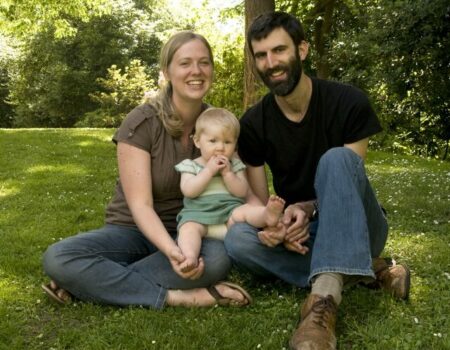
Rachel Austin with husband Jon and baby Adelaide, photo by E. Soule

Rachel Austin with husband Jon and baby Adelaide, photo by E. Soule

Share the love, post a comment!

{ 11 comments }

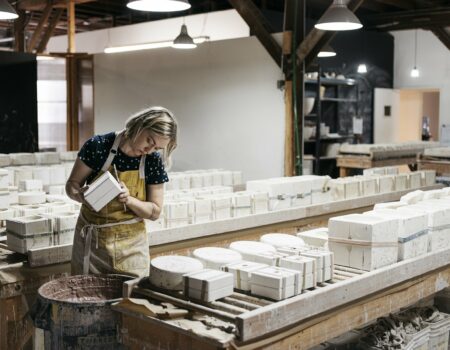
Ethan Jantzer – photogram artist

by admin on January 21, 2010

Artist Ethan Jantzer creates photograms that take photography back to its roots. Moments of boredom while working at a photo lab led Ethan to experiment with raw film and lights and to hone a process he likens to creating a sunburn on film. Just about any object sparks his interest — fish, twine, grass — and he uses liquids such as Gatorade and Windex to achieve the colors he wants. Whether he’s creating a short movie or experimenting with subjects and techniques, Ethan loves the what-if hunt that keeps this art form fresh.

Goldfish photogram by Ethan Jantzer

Goldfish photogram by Ethan Jantzer

How do you create your photograms, and how did you first come up with this idea?

The medium and basic process of creating an image without a camera dates back to the 1700s. The photogram is how photography began. The techniques I use to create my work is rather unique though and is something I’m always refining. The way a photogram is produced is best understood when you think of it as a sunburn on film. If you were to lay in the sun with a leaf on your back, at the end of the day you would have a sunburn in the shape of that leaf. I essentially do the same thing using large sheets of photographic film or paper.

Most people that study or have studied photography have created photograms. It’s often just a quick exercise used to illustrate how light-sensitive materials work. Years ago, I was working in a professional photo lab, and on my lunch hour I would sneak into a darkroom and mess around a bit. One day I started exposing raw sheets of film to various lights, creating small color studies of sorts. Those “Hey, I’m bored… what happens if I do this?” images quickly led to lots of experiments with sheet film and the basis of my unusual process.

In total darkness, I lay objects on top of or in front of large sheets of photographic film or paper. Once the composition is in place, I flash light through colored liquids like Gatorade or Windex. This burst of saturated colored light creates shadows that are captured on the film or paper. By combining multiple flashes of light from various angles, I am able to create unique photographic images. One thing I really like about the process is how it forces me to pay attention to subtle changes in an object’s form or texture. I guess the same could be said about the images. The lack of detail makes us address or at least acknowledge the often overlooked and subtle details.

Red poppies, photogram by Ethan Jantzer

Red poppies, photogram by Ethan Jantzer

Why Gatorade and Windex?

I was working on a project for the Sports Authority, creating some large pieces for the walls of their corporate offices. It was hot in the studio, and I was drinking a lot of Gatorade. For some reason, I decided to see what would happen if I flashed a light through the bottle, and I liked the image it created. Gatorade is perfect because it’s inexpensive and comes in a variety of colors. My studio has a big rack with bottle after bottle of all these different colored liquids. When I start a project, I create these various formulas for how I plan on creating the color in the piece. The formula is a specific combination and layout of flashes/exposures. Each flash passes through a specific liquid at a pre-determined distance and angle. Even after years of refining my process, I’m not always able to pre-determine the outcome. Some of my favorite works began as happy accidents. Working in the dark quickly leads to a more improvisational approach. That’s when it’s most fun to pick up the processed film — I never really know what I’m going to get!

Tall grass on red background, photogram by Ethan Jantzer

Tall grass on red background, photogram by Ethan Jantzer

Tall grass photogram by Ethan Jantzer

Tall grass photogram by Ethan Jantzer

What is your background in art? Did you start with traditional photography?

I grew up in a rather creative house. My mom was an artist and always encouraged us to create. I never anticipated that hobby would lead to a passion and eventually a career. It was just fun, just what we did. I have an Art and Industrial Design degree but didn’t get it until later in life. I had my first gallery show years before I took a college art course. The academic art world and exhibiting are so different. When I went back to school, it was challenging at times to juggle the two. It would be boring if I wasn’t still learning. I’m trying to pick up something new every time I go into the studio or meet with another artist.

It looks like your process doesn’t allow for a high degree of focus or definition, which works in your favor. What are you trying to achieve, and what makes for a successful image for you?

A lot plays into the focus and detail of a photogram, but one of the biggest factors is the distance between the object and the film’s light-sensitive surface. Where the object is in direct contact, the edges are sharp. But even the slightest separation starts to vary the focus. The further away it is, the more blurred or the softer the shadow’s edge will become. I enjoy images that have both — selective focus where parts are sharp but others are soft. This combination provides depth while provoking further interest.

My definition of a successful image changes. Sometimes it’s about color and figuring out what combination of light will give me what I’m looking for. Other times I’m after something specific with the silhouette. The easy answer would come down to aesthetics, I guess. The sale of a piece would determine some success. I hate that sales are part of that equation, but without them I couldn’t continue to feed the passion/addiction of creating. I have plenty of work sitting in a closet that I believe is successful, but in the end it’s still sitting in a closet. If it was hanging somewhere, I would be less likely to doubt its success.

Dandelion silhouettes photogram by Ethan Jantzer

Dandelion silhouettes photogram by Ethan Jantzer

Clover on red background photogram by Ethan Jantzer

Clover on red background photogram by Ethan Jantzer

I see you do a lot of botanical images but also fish and other things. What inspires your work, and what makes you want to capture a certain image?

I’ve always liked shadows and the subtle ways the angle of the sun creates and morphs the overall form. The different shadows cast from everyday objects and actions inspire me. I like being able to create, record, and often enlarge these moments. I want to capture most everything. I’m sure it gets frustrating for my friends and family, because I’m always stopping or talking about various things I want to photogram. It’s not uncommon for me to stop and pick some weird thing up from a parking lot or store shelf only to closely examine it and comment about capturing its shadow. There’s really not much that doesn’t spark a desire to throw it on a piece of film and flash some lights.

Green grass photogram by Ethan Jantzer

Green grass photogram by Ethan Jantzer

Frayed twine photogram by Ethan Jantzer

Frayed twine photogram by Ethan Jantzer

Part of the appeal of your work is how you mount it on acrylic without a frame. Tell me about how you experimented to find this way of displaying your work.

I’ve been doing face mounts for several years, and even though I love the clean look it provides, I’m always looking at new substrates and thinking about new ways to finish my work. Years ago, I saw a show with some pieces presented in a similar way and just loved the simplicity. It has its strengths but overall is difficult to execute. So many surfaces needing to be perfect and dust free. It gets a little nerve-wracking.

Images mounted on rounded corner plexiglass, by Ethan Jantzer

Face-mounted work by Ethan Jantzer

Rounded corner mountings by Ethan Jantzer

Rounded corner mountings by Ethan Jantzer

What sizes are you typically working in, and are you able to do large-scale pieces?

Many of my images are square. This is a product of my process but also an aesthetic I enjoy. With the square images, I have a few standard sizes I like to work with: 12×12, 16×16, 24×24. I have produced pieces on plexiglass that were 4 feet by 8 feet. I’m limited because of the size of the acrylic sheets. Anything larger has to be mounted differently or wallpapered in sections.

Photogram with alternate mounting by Ethan Jantzer

Photogram with alternate mounting by Ethan Jantzer

How are you selling your work?

I just left a gallery I had been with for several years, so that question is all the more relevant. I may need to contemplate adding to this equation. As of today, I work from my studio and Art + Soul Gallery in Boulder. I also work with a handful of art consultants from around the country that place work in corporate collections.

I understand you recently did a public art project. How does this work differ from your normal projects?

Everything is different. The medium, the size, the presentation, the big legal contract from the city, etc. It’s a video installation at the east end of concourse B inside the Denver International Airport. I consider myself lucky to have such a great opportunity to show my work, and the budget allowed me to explore many exciting new methods. The public art realm is a bit intimidating, and working in a secure environment like an airport comes with its own set of challenges. I learned so much while completing Are We there Yet? It was a great experience. Now the question is, how will it be perceived? Heavy scrutiny of public art isn’t uncommon. It’s no good if everybody likes it, but it’s a failure if nobody likes it. I’d like to avoid that storm, if possible. I couldn’t say enough about how special the opportunity was — it allowed me to explore new methods and practices that I wouldn’t have otherwise.

I created a giant stretched canvas of sorts — a big piece of fabric about 20 feet long and 9 feet tall. At sunset, I had people from all over come and walk, run, play, etc., on one side of the fabric while I filmed the shadows they created on the other side. After weeks of capturing various shadows and silhouettes, I was able to layer and compile hundreds of clips to produce a 16-minute film. So at DIA, I have built a big box of sorts and the movie will project within this structure. It’s a fun piece, a portrait of life and community shown using shadows and silhouettes.

Film photogram project by Ethan Jantzer

Film project by Ethan Jantzer

Film photogram project by Ethan Jantzer

Film project during installation by Ethan Jantzer

Where do you see your work going from here?

I’m not sure. I think I’ll continue to play around with the various series I’ve been working on and wait for that moment of ah-hah to begin anew. I’ll apply for future public projects and work on developing new gallery relationships. I’ve been collecting items for a really large photogram of plastic weapons and am hoping to find an institution to display it in the next year. I’m not an anti-gun guy but was really surprised at how quickly my two boys had amassed so many small plastic weapons. One day while picking up toys, I started to put them all into a pile. And when I was finished gathering them, I decided I would do a large piece packed with these tiny silhouettes. I’d really like to work on a project that required some fun travels — let me know if you hear of anything exciting!

Photogram by Ethan Jantzer

Photogram by Ethan Jantzer

What are some of your favorite things, whether they impact your work directly or just make you happy?

I’m a bit of a design and architecture enthusiast. If I had it to do all over again, I probably would pursue architecture. I play a lot of disc golf, spend a lot of time dreaming about future home improvements, and spend a lot of time with my wife Susan and our two boys. Corbin is 5 and Caden is 3, so our house can get a little crazy at times. I really like Mexican food and chocolate. I eat way too much chocolate.

Ethan Jantzer

Ethan Jantzer

Watch for Ethan’s new website coming soon!

Share the love, post a comment!

{ 5 comments }

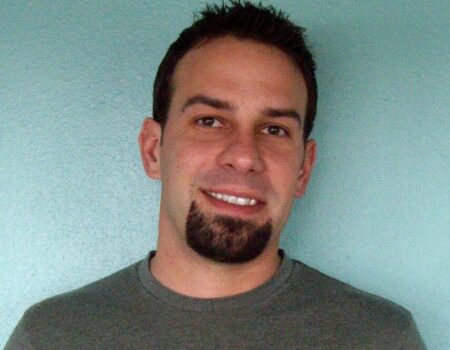
Nina Garduno – believer

by admin on January 14, 2010

Nina Garduno is a creative optimist whose soulful approach to business is regarded by many as prescient. Her FREECITYsupershop, located in Malibu, is conceptually part artistic commune and part transcendent experience. A former buyer for Fred Segal and Ron Herman in Los Angeles, Nina’s dislike of ‘who-cares commerce’ continually challenges her to take retail beyond itself. Drawing inspiration from her childhood growing up in bohemian Laurel Canyon and from her travels around the world, Nina has created a global destination and a world within a world where everything is possible.

FREECITYsupershop dove

FREECITYsupershop dove

You’re thought of as a trendsetter, a merchandiser, a buyer, a designer and creator, a curator. How do you think of your work?

Well, it depends. I mean, how I feel about my work now is that it’s more art-bound than it’s ever been before. And it’s about small groups of people being able to make the impossible happen. So it’s kind of keeping the ethic that all things are possible.

I’ve got a workshop in Hollywood, and there are about eight people that work in this workshop. And I’ve got a print shop downtown which does all the print. We make everything — from clothes to bicycles to structures to flags to tents to furniture, everything — and none of us really went to school for it. So it’s kind of like, ‘how do we do it?’ We get an idea of what it’s going to be and then it’s just kind of brainstorming about how we can make it happen, with all of our limitations — whether they’re financial limitations or just downright abilities — and trying to bring it to its highest possibility. So it’s kind of like very simple elements, bringing them to their highest possibility, with a super high expectation of the result and kind of keeping that ethic. So for me, it’s keeping the ethic, keeping the bar high, and trying to reach the bar. It’s really rewarding like that. I don’t know that it’s very different from what I’ve ever done in the past, but I think it’s always been about taking the harder road. Because ‘easy’ has never been challenging for me. I’ve never been excited about easy, so the challenge is that it’s hard.

For instance, we did the Natural FREECITY History Museum. We redo the store once a year in August because we opened the store in August four years ago, so we take an idea like that. And in this case it’s about really making it authentic, as authentic as possible to a real natural history museum. It’s just FREECITY’s take on it. So we made dioramas, we made Peking Man, and we made a lion — everything that goes along with that. And we didn’t use taxidermy or anything like that, so it’s about ‘how do you make that item not look like a stuffed animal?’ How do you make it real, as real as possible?

So it’s like a snowglobe, the store itself is like a snowglobe. That’s why we call it a supershop — it’s a small space, about 1500 square feet that anything can happen in. So if you keep that mindset and keep all possibilities open, you can make really extraordinary things. And that sounds totally cliché, but it’s true. That is what we’re doing. A lot of people think, being that we live in L.A., that we just got a prop house and borrowed stuff. But we didn’t. We made it all from scratch. For me, it’s very rewarding to know we made it happen.

Lion in Natural Free City History Museum exhibit, by Nina Garduno

Lion in the Natural FREECITY History Museum show

Front exterior of Free City Supershop, created by Nina Garduno

Front exterior of FREECITYsupershop, created by Nina Garduno

I understand the initial inspiration for FREECITYsupershop came from your travels, in particular to the commune Fristaden (‘free city’) Christiania in Copenhagen. How did this go from an initial feeling and revelation to actually opening your shop in 2005?

I think the revelation was that I’d been to places like that all my life, and it all clicked in one moment. When I went there in particular, somebody said, ‘Have you been to the free city?’, and I went ‘No, but what’s the free city?’ I was in Paris at the time on a buying trip and I had a few days, and I thought ‘I’ll go see it, whatever this is in Copenhagen.’ So I went to go see it, and the inspiration was that it was a collective group of people living like they checked the ‘other’ box. And it was like, ‘Wow, it can be anything.’

You know, why are we into this structure of city, or what it’s supposed to look like — it can be anything we want! So that was the inspiration, and I realized there are places like that everywhere. Some are based in architecture, some are based in religion, some are based in agriculture, some are based in total looney-zone, nudist colonies — it doesn’t matter. The point is that people are choosing to live a different life and making it happen. And I love that. So if I don’t want to move and go live in a commune or a kibbutz, how can I feel that feeling? So what happened to me was that it was a feeling. And if I want to live that feeling, I can live it anywhere. So FREECITY is a state of mind, it’s more of a feeling — and it’s personal.

And I think that’s the thing about the words. The words are personal — it’s not a brand for me, even though people call it a brand. It’s not a gimmick or a slogan. It’s a state of mind, it’s your own. My FREECITY is mine, your FREECITY is yours. And to keep it that way is what’s been the challenge: to keep it personal, to keep it so that it doesn’t feel commercial. So that I never get into that commerce thing that I hate so much, where people are buying stuff just to buy it, consumption for consumption’s sake. That for me is the biggest turn-off. You know, I change the labels all the time inside what I make to keep that purity about FREECITY. FREECITY is like the umbrella, and everything underneath it is kind of like what lives in FREECITY.

Interior display at Free City Supershop, created by Nina Garduno

Interior at FREECITYsupershop, created by Nina Garduno

So did you realize early on that this was going to be a shop? Or did you have other ideas about what this concept could be?

Well, you know what? Yeah, I had many ideas of what this could be. One of which — and why I’m so attracted to what Liz [Lambert] does — was a big, broad piece of land, where anything could happen on that piece of land. Which is what Liz is realizing with El Cosmico. And I admire so much of what she does because she’s doing it, against all odds. Nonconformist, making it happen, and getting like-minded people to seize their own possibilities, and then make something very special and beautiful on a high level. She’s doing these trailers, but it’s not just a trailer park. It’s ‘how can you make that trailer incredible?’ So for her to bring it to that potential is really inspiring to me.

So a body of land and to do the projects on the land, and then clear the space and do another project on the land was the first idea. And that’s actually what brought me to Marfa, because I was looking for a little piece of land to do that in New Mexico — because anything can happen in New Mexico — but it just didn’t seem like the right place. Then I took a trip through Marfa, and we ended up buying a little piece of land there. That place is a free city, Marfa is a free city. It happens to be full of artists and creative people and regular people. It’s kind of like this ghost town that became something. And it’s like-minded. So for me, I live in one, or I have a place in one. It is a free city.

The INMUSICINLOVE VIBRATIONSANDCOLOR show at FREECITYsupershop

The INMUSICINLOVE VIBRATIONSANDCOLOR show at FREECITYsupershop

It’s clearly as much an experience as it is a shop. And the way you talk about love and faith, it strikes me that your creations are like physical expressions of this feeling. Is this a fair description of your intent?

Yeah, the intention is to totally be telling the truth. So it’s like about honor and telling the truth. And if it’s wavering off that and going into some other category, I throw it away and try to bring it back to that other quality. And I think because of that, it takes me on that other road inherently, because you have to have faith.

And, by the way, I fall into lack of faith while we’re creating the experience, especially with this last thing we did, because I was afraid to do Peking Man or these Neanderthal-type creatures. Because I went to New York to the Natural History Museum, and, oh, my god, it’s really incredible. They’re like the unsung heroes, the people that do those museums, because the dioramas are incredible, the sculptures are incredible. Just the celebration of the universe, and not just humans but also incredible animals and things that fall from the sky. It’s like the most amazing thing that somebody thought of to do a natural history museum — it’s insane! They’re so great.

Anyway, I saw these two people, a diorama, of the first walking man. It was a man and a woman, and it touched me so, it was so pure and so optimistic. You know, coming out of all this darkness that we’ve all gone through, it was like, how can I achieve that? And I was worried — are people going to freak out because I’m showing genitals, or it’s scary because they look like monsters, or whatever, right? And it came down to, it can’t be a natural history museum without the first man — I mean, it just can’t. And I added more fur, but to put it in clothes or put a garment on it, it would just be a mannequin, a Barneys window. So to keep it true, there was a lot of fear around it, and people that I work with helped me through it. To have faith, and have faith that it’s the right choice, and to not be driven by what other people think of the end result. Some people walk in and go, ‘oh, my god, that scared me,’ and some people walk in and they’re so amazed. That is the point — I don’t need a guarantee, but sometimes I fall into the fear.

Peking Man display at Natural Free City History Museum, created by Nina Garduno

Peking Man display at Natural FREECITY History Museum

Free City Supershop sneakers, by Nina Garduno

FREECITYsupershop sneakers

In this case, it wasn’t the fear that you could pull off your vision, it was more a fear of what other people might think?

Well, I don’t know! It’s both. Just to pull off the vision would be that it rises above somebody’s impression of it. That it rises above all of that. That it goes into another realm of appreciation, instead of just that blanket opinion, which is easy to happen in a retail environment. Because I don’t have a museum — I have a thing that people can buy things in. So I’m sitting there with a lot of critical eyes because they’re purchasing something. So I kind of went about this feeling like everything in the store is either a relic or a souvenir of the experience, so it was like making souvenirs. So the challenge is to get it to a point where it’s beyond retail, it’s beyond shopping, it’s beyond commerce — and it can take you somewhere, into an experience. Getting it to rise above a blanket critique, and I’m sure it happens, so I have to remind myself of that because the stakes are high. I’m not confused — and I don’t think Liz is either, or anyone who does something similar to this — that to keep the door open and to keep the ‘exhibit’ alive, I’ve gotta ring the register. So there is commerce involved, but there is with the museum as well — they may call it a donation, but you’re still paying $2 or $7 when you go. Not always, but there’s commerce involved, and we’ve gotta make the money to keep the door open. It’s a funny balance.

I want to take this love question a bit further. I wondered if part of your mission with FREECITYsupershop is a reaction to the mass-production of things made without love?

A hundred percent. That’s a really great way of putting it, as a matter of fact. The wrong in what I make is the right of what I make. And there’s a fine line between them. And whether I’m making something that’s hand-screened or we mix every color from pigment, it’s got a lot of hand to everything we make. So for someone to look at it and be critical and go, ‘oh, this is defective’, and you go, ‘well, there’s a fine line between defective and beautiful.’ So when we’re doing our quality control, that is the defining difference: is it beautiful? So if it isn’t and it didn’t fall into that category, then we throw it out — it didn’t work. Yeah, love — love is important. The bottom line is that, you know, that’s really all that matters, isn’t it?

Love in the shoes at FREECITYsupershop

Love in the Quoddy boots at FREECITYsupershop

LifeNatureLove at FREECITYsupershop, created by Nina Garduno

LifeNatureLove at FREECITYsupershop

Jane Goodall image at the FREECITYsupershop, created by Nina Garduno

More life, nature, and love at FREECITYsupershop

Words play a big role in the graphics you print and in the shop interior, but I understand words are also the starting point for a lot of your concepts. How do these word concepts come to you, and how many of them actually come to fruition?

Oh, boy. Again, I stick with FREECITY as the umbrella to all things possible. So I’ve had four different shows now. The first one was TEXASTOKYO TOKYOTEXAS, and that came from an inspiration from a trip I took to Japan, and I had just come from Marfa. And I saw a show there in Japan that was BerlinTokyo TokyoBerlin. So the whole thing was really interesting about these two places that are so very different, and what happens when they come together? And actually, in the end, they’re not that different — they’re like-minded. So that was my inspiration for that. And then, of course, you find everything that has to do with it. For instance, we made a teepee that was gold-flaked and hand-screened, with fresh-cut, giant bamboo. So there’s your combination, there’s the mix, in a physical sculpture.

Teepee at FREECITYsupershop

Part of the TEXASTOKYO TOKYOTEXAS show at FREECITYsupershop

So the words are very crucial, the words are important. And one of the things that is my pet peeve about copycat resources now is that they don’t care about the words! In the words “Let’s go,” which I kind of put on a lot of what we make, it’s you and me together, let’s go together. So it’s very inclusive, and I think it is based in goodness.

You know, I’m not interested in t-shirts that say ‘Bitch’ — I’m just not interested in it. And particularly in what we just made with the Natural FREECITY History Museum, putting a lot of animals on things could be a super easy solution to making that concept happen. But, ok, what if you don’t do that? What if you tie your hands and go, ‘I’m not going to do that.’ Then what is it? What is the core of the beginning of all things? And we came up with ‘Big Fast Strong.’ Big, bigger, biggest, Fast, faster, fastest, Strong, stronger, strongest. It’s like the common denominator to all things, and underneath that realm of a natural history museum is survival of the fittest. And so that became a big handle for the whole thing. And then ‘Sending Light.’ It’s the two phrases together — it’s the Natural FREECITY History Museum/Sending Light. Behind the Peking Man, on the wall it says Sending Light. I mean, when man stood up and walked together, it’s the most optimistic possibility. It’s like the beginning. And I think there is a lot of goodness in the world, so it is about sending light and all those things. It can sound corny — but I’m a believer, what can I tell you!

This was the name of our last show, Believers, which had to do with pop art and a common experience that happened through the world in the late ’60s and early ’70s. The first yogi came to America, and it’s about religion and belief systems and breaking down belief systems and just everything. So it’s amazing what you can collect under an idea.

BigFastStrong t-shirt at FREECITYsupershop

BigFastStrong t-shirt at FREECITYsupershop

Word concepts at Free City Supershop, created by Nina Garduno

Word concepts at FREECITYsupershop, created by Nina Garduno

A Free City Supershop t-shirt, created by Nina Garduno

NEIGHBORHOOD t-shirt at FREECITYsupershop

This seems to be an interesting era in design, where some of the most successful creations are ones that get shaped in an unpredictable fashion by human community and interaction, which we’re seeing a lot of with technology now. I know you freely invite people in to simply experience the shop, and the local surfers help themselves to the oranges you put out. To what degree is FREECITYsupershop being shaped by this interaction?

Well, I draw on different artists and invite different people to help. For instance, there’s an artisan fragrance I have in the store called L’Oeil du Vert made by Haley Alexander van Oosten, and it’s incredible what she makes. And I’m not just talking about natural fragrances, I’m talking about the real thing. Haley has plants in her studio/lab that she’s extracting oils from — the real deal. She’s flying to India for plants, she’s flying to Hawaii for plants — Haley is a very brilliant woman. So I’ll give her a phrase, and she’ll come up with a fragrance for it. And they’re very expensive. Haley did a whole thing called Carmot, which is five different fragrances, and they’re very beautifully made. There’s a glass interior and a wooden vile — it’s crazy what Haley does. And it was $5000 for the whole thing, and just the basic thing she made for us was $850. It’s like the right people can’t always afford it, but they are drawn to it. And then those that can, buy it, because they understand the rarity.

L'oeil du Vert fragrance at Free City Supershop

L'oeil du Vert fragrance at FREECITYsupershop

And there’s a few other people I’ve invited to do stuff too, like Clare Rojas — she’s a painter who lent some of her paintings. And they’re not just coffee shop paintings — I mean, this is the real deal. Scosha, who does jewelry — she’s brilliant. She did the most beautiful jewelry for the last show we had. Wendy — from Wendy and Lisa, if you’re familiar with Prince and the Revolution — she did the music for this particular show, and there’s a soundtrack that lasts the entire year until next August. Because everytime somebody comes in, they’re hearing it for the first time, and it’s part of the total. So she developed the music for that. I did a collaboration with Maharishi and Heath Ceramics. And I don’t know if you know how hard it is to get these people to do a small little thing with you. I’m honored every time that people say yes to that. Lisa Eisner, who’s incredible, she’s always working with us on every show that we do. Commune worked with us — they developed the nap bag for us. So it’s like we’re all showing up for each other to make something real. And it’s so rewarding in that way.

We made less money this year than we did last year, but my heart’s fuller. I got something out of it different this year. And just people walking in the store, there isn’t a day that I don’t go in there — and they don’t know that I make it — that somebody doesn’t go ‘I drove from Orange County,’ or ‘I flew my family from Michigan because this is all my daughter wanted,’ or ‘We wanted to see the store.’ I mean, I’ve had people cry! People have cried in there. I’ve heard many times, ‘This reminds me of something. This is me, this is me, there’s something about this that is myself.’ And, you know, kids don’t need to explain it or have it explained — they get it right away. But sometimes adults will be like, ‘what is it?’ And they may think I’m being difficult, but it doesn’t really matter what it means to me, it matters what it means to you. What you take from it is the most important thing. Who cares what it means to me?

Maharishi/FREECITY snopants at FREECITYsupershop

Maharishi/FREECITY snopants at FREECITYsupershop

Serving bowls from Heath Ceramics at FREECITYsupershop

Serving bowls from Heath Ceramics at FREECITYsupershop

You’ve talked about travel and growing up in Laurel Canyon in Los Angeles in the ’70s as a big influence on your sensibility. Are there specific moments, images, music, anything, that you look back on now and think ‘wow, this really shaped who I am and how I see the world’?

I look around in my store now, and I’m realizing it has everything to do with my childhood. It’s like I’m realizing myself. I mean, that sounds totally narcissistic. It’s like you don’t even know why you’re driven to do a certain thing, and you realize it’s because it’s myself. It’s that simple and fundamental. The workshop and the store are very similar, and it’s important they are the same.

When I was a buyer, I was at the Ralph Lauren showrooms. And in Ralph Lauren, it’s the most incredible showroom, right? It’s like everything you imagine Ralph Lauren to be. And then I went to the bathroom, and it was all corporate and cold and crazy in there. And I thought, ‘oh, my god, this is who they really are!’ It was like ‘oooh, I saw it.’ It was like a movie set, and none of it’s real.

So for me, it was important to make the workshop the same as the supershop, and then I just realized it was more what I come from and who I am and what FREECITY is. It’s actually gone beyond myself, and it’s like protecting this other thing. The fact that I can look at it and go, ‘ooh, it’s all so me,’ is, you know, a point I didn’t expect to understand about myself. And it is like a mirror. And maybe it’s like someone who can really sing great, and they’re singing and they’re like ‘wow, I got to really feel all of me.’ Well, I feel it in my little way here with FREECITY. I see myself in it, I definitely do, but it’s also the bigger picture. It’s also the orchestra that’s making all the music. I just happen to be the one saying, ‘come be in my orchestra,’ and then all these incredible people are wanting to come be in this orchestra. And we’re all making this amazing music, and it’s so rewarding that way.

Love and color at FREECITYsupershop

Reflections of Nina at FREECITYsupershop

Free City sweatshirt paying homage to Nina's collaborators

FREECITY sweatshirt paying homage to Nina's artistic collaborators

I wanted to ask you about any other shop locations you plan, your website, or any other ways that you’re connecting with people.

The website initially, because I was so off commerce or selling it out — like a lot of celebrities wear FREECITY but I never post pictures of celebrities wearing FREECITY, I always thought it was a weird thing to do — but I started the website because internationally there are a lot of copies, so people couldn’t find us. So that’s why I started the website. First it was just supposed to be about information, about being able to at least find the real thing, about getting something authentic. And now it’s turned into a store. And so now the challenge is to be able to have it feel like something you’re inside three-dimensionally but you’re looking at on a website. So I’ve got mixed emotions about the website and about it being commerce. But on the other hand, it’s totally necessary and I think it’s making people happy, so I feel good about it.

In terms of the store, I have such a lack of faith in retail, which is one of the reasons I started this, because it was like a reaction to all of that who-cares commerce.

Do you have plans to open up other stores?

Yes, I do. I open a store on Highland [Los Angeles], and I’m just working on the lease right now. Hopefully it’ll happen in April or May. And that’s going to be the hardest thing I’ve ever done because I can’t get a loan to save my life. Perfect credit, and as long as we’ve been in business we’ve been completely independent, and I can’t get a bank to give me a line of credit. So it’s really going to be hard to do it.

Do you think this could translate into other regions outside of your immediate area?

Oh, my god, I’d love it to! I’d absolutely love it to. I’ve got total fantasies about that happening. I’d love to have a store in New York, a store in London, a store in Japan, a store in Berlin — who knows? Big or small, it doesn’t matter. Just so that somebody can have a real experience when they come to be in something. You know, for me to sell to a store and have them put my little Sending Light sweatshirt next to some other brand — you know, it’s sad for me. And I’m like, ‘OK, it’s commerce. Ouch.’ It’s painful, but it’s financing the other stuff I’m doing. So there you go, I have to ring the register, and that’s how I’m ringing it. So I’m excited about doing more shops. We’ve turned down a lot of money and finance, and I don’t have any regrets about that. I’m fine with that. I don’t need to be loaded, I’m fine with it. I’m just really interested in preserving this and keeping it real.

tokyo014_smallest

SAME HEART TOKYO BOUND with Seilin & Co.

Sending Light t-shirt from Free City Supershop, by Nina Garduno

SENDING LIGHT t-shirt from FREECITYsupershop

I can’t wrap up this interview without asking you about your Artists Wanted program. Is that a program you’re still doing, and where do you see this going?

Yeah, we do it 365 days a year. We wholesale it to people that buy the other stuff. And it’s $75 for the t-shirt — it’s $75 when we sell it to another store, and they sell it in their store for $75, just to make sure nobody’s putting a penny in their pocket. It pays for itself completely, and then the rest goes to some known institutions. And one went to Margo Victor — she’s a filmmaker and kind of like a Renaissance artist, she can do anything. So that’s something we don’t get a tax write-off on, but that’s not the point. So it’s gone to great things — it’s gone to Habitat for Humanity, the Musicians’ Fund, it’s gone to the Baryshnikov Dance Academy, it’s gone to the Silverlake Conservatory of Music, it’s gone to Project Angel Food. It’s going to go to Blunk this year. So the idea is that you’re paying $75, but you’re giving $7500 to your little group. It’s helped with projects that we’ve done — it helped with a temporary store we did in Tokyo.

It’s something we don’t advertise because I always think that’s totally weird, you know, like Gap and RED. You know, there’s two ways to look at this. It’s like, yeah, they’ve helped bring awareness and money to impoverished Africa and AIDS — and thank god for that — but on the other hand, they’re rich too because of it. I just think it’s wrong, I just do. It rubs me really wrong. So a lot of people have this t-shirt and don’t know — I think I’d sell a lot more if I advertised it! I don’t know, it’s difficult. The point is to help as many people as possible, but I never want anyone to feel like I’m using it to serve myself, because it was not intended for that.

ARTISTS WANTED t-shirt at FREECITYsupershop

ARTISTS WANTED t-shirt at FREECITYsupershop

I went to the Saatchi Gallery in London right before I started the Artists Wanted t-shirt, and I was so moved by all of these paintings. It was so brilliant and beautiful and sublime. God, when you see a great painting — or a great anything — you can just go to tears, you know? And I was like, ‘wow, what can we do?’ I know I can make a t-shirt, I can do that, and I can give away that t-shirt. If it pays for itself, I can definitely do that. We can all do something, so that’s how we do it.

Nina Garduno

Nina Garduno

Share the love, post a comment!

{ 7 comments }